The short version
Chiggers are eliminated by treating tall grass, brush, and shaded areas with residual insecticides, plus personal protection like DEET repellent and long clothing. For severe infestations, professional yard treatment ($100–$450) is most effective.
- Chiggers are larval mites that feed on skin cells, not blood, causing intense itching.
- They thrive in tall grass, brush, and humid ground cover from late spring to early fall.
- Effective control combines yard treatment (sprays or granules) with personal prevention.
- Professional treatments cost $100–$450 and often include a workmanship warranty.
- Myth: Chiggers do not burrow into skin; they inject enzymes that liquefy skin cells.
- Research: Smith and colleagues' 1998 case series of 94 pediatric patients at a single Midwestern U.S. emergency department found physicians attributing 98% of cases to insect or chigger bites, an attribution rather than laboratory confirmation, from a selected clinical group rather than the general population.
This guide is for homeowners, especially those with children and pets who spend time in grassy or brushy yards. If you live in a region with warm, humid summers and have noticed itchy bites after being outdoors, you'll find practical, step-by-step advice for eliminating chiggers and preventing future infestations.
What to look for
When a person or animal brushes against vegetation, the larvae crawl onto the skin and seek out thin, moist areas like ankles, waistbands, and armpits. There, they inject digestive enzymes that break down skin cells, then feed on the liquefied tissue. The itching begins a few hours later, driven by the body's allergic reaction to the enzymes. Chiggers are the larval stage of trombiculid mites, measuring less than 1/150th of an inch—too small to see without magnification. They cluster in shaded, humid areas: tall grass, overgrown brush, leaf litter, and around the edges of wooded lots.
- 1Intensely itchy red welts, often clustered around ankles, waist, or armpits, appearing 4–24 hours after exposure.
- 2No visible bite marks—chiggers are too small to see, but the welts are unmistakable.
- 3Increased complaints from children or pets after playing in tall grass or brush.
- 4Presence of tall, unkempt grass or overgrown vegetation near your home.
- 5Bites that occur primarily in late spring through early fall (May–September).
- 6Itching that worsens at night and can persist for up to two weeks.
- 7Patches of skin that feel intensely itchy but show no obvious insect.
Why it’s worth acting soon
- Secondary skin infections from scratching can lead to impetigo or cellulitis.
- Prolonged discomfort and sleep disruption, especially for children.
- Chigger populations can grow rapidly, spreading across your entire yard.
- Repeated exposure may increase allergic sensitivity, causing more severe reactions.
- Pets can become hosts, bringing chiggers indoors and into furniture.
Treatment options and typical costs
Broadcast Granules
$20–$50 per bag (covers 5,000–10,000 sq ft)
Apply granular insecticide (e.g., bifenthrin or permethrin) with a spreader over lawns, targeting tall grass and edges. Water in lightly after application. Provides 2–4 weeks of control.
- Time
- 2–4 weeks
- Best for
- Large lawns and areas with moderate chigger pressure.
Liquid Spray Treatment
$15–$40 per quart (makes 10–20 gallons)
Use a hose-end sprayer or backpack sprayer to apply a liquid insecticide (e.g., lambda-cyhalothrin or cyfluthrin) to grass, brush, and shaded areas. Covers 1,000–5,000 sq ft per gallon.
- Time
- 3–6 weeks
- Best for
- Targeted treatment of specific hotspots and smaller yards.
Professional Yard Treatment
$100–$450
Licensed pest control applicators treat the entire property with residual insecticides, often including a 30–90 day warranty. Includes inspection, application, and follow-up if needed.
- Time
- 4–8 weeks
- Best for
- Severe infestations, large properties, or homeowners who want results that vary by property and pro.
Prices are typical published ranges. Ask what’s included before you compare quotes.
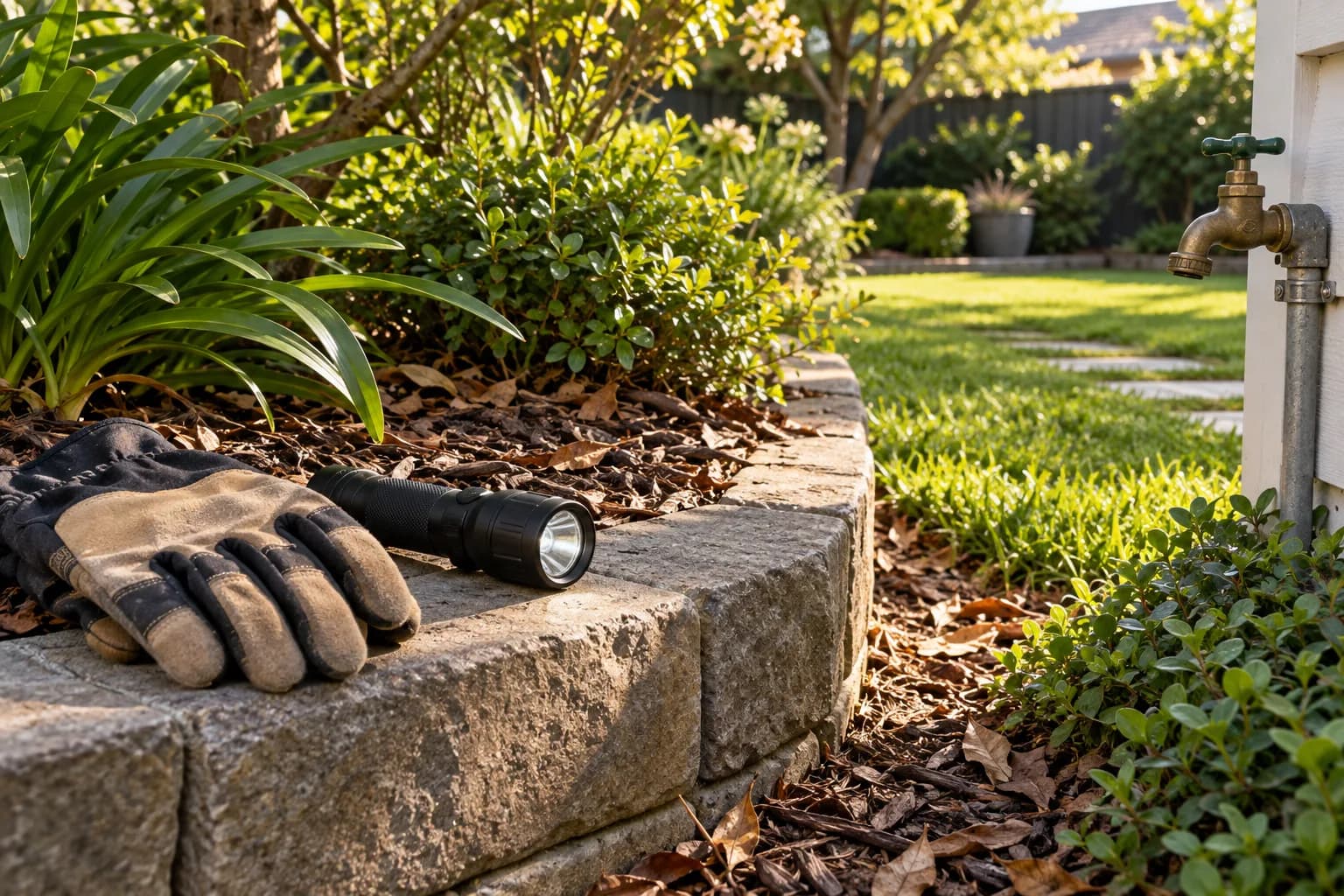 Thick, damp mulch by the house can hold chiggers. Keep it thin and let it dry out.
Understanding Chigger Biology and Behavior.
Understanding these habits is key to effective control. In lawns, they are most common where grass is long, especially near fence lines, gardens, or woodpiles. They avoid direct sunlight and dry conditions. Chiggers prefer specific microhabitats: tall grass, overgrown weeds, brushy areas, and the edges of forests. The red welts typically appear 4–24 hours after exposure and can persist for 1–2 weeks. The intense itching is an allergic reaction to the enzymes, not the chigger itself. They use their mouthparts to inject saliva containing digestive enzymes that dissolve skin cells, forming a straw-like tube (stylostome) through which they suck up the liquefied tissue. Contrary to popular myth, chiggers do not burrow into the skin or feed on blood. They are most active when temperatures are above 60°F and humidity is high, which is why peak season runs from May through September in most of the U.S. The larvae are phototropic—they climb up grass blades and wait for a passing host. Only the six-legged larval stage bites humans; after feeding, they drop off and molt into eight-legged nymphs and adults that are harmless to people. Chiggers are not insects but arachnids, related to ticks and spiders.
Step-by-Step DIY Chigger Removal for Your Yard.
For added safety, consider using products labeled for use around pets and children, such as those containing bifenthrin. Keep children and pets off treated areas until dry (typically 1–2 hours). After treatment, avoid mowing for 24–48 hours to allow the insecticide to dry and bind to grass blades. Reapply every 3–4 weeks during peak season. For larger lawns, granular insecticides (e.g., permethrin or bifenthrin) can be broadcast with a spreader, then watered in lightly. Apply in the late afternoon or early evening when chiggers are most active, and focus on edges of lawns, brush piles, and shaded areas. For small areas (under 5,000 sq ft), a liquid spray concentrate like bifenthrin or lambda-cyhalothrin mixed in a hose-end sprayer works well. Next, choose a treatment. This alone can reduce chigger populations by 30–50%. Rake up leaves and remove debris to reduce hiding spots. Mow the entire lawn to a height of 2–3 inches and trim weeds and overgrown vegetation. Start by identifying hotspots: areas of tall grass, brush, or shaded ground cover where you or your family have been bitten.
 Damp leaf piles hold moisture chiggers like. Rake them away from the house.
When and Why to Hire a Professional.
Plus, we offer seasonal programs that keep your yard chigger-free all summer long. For many homeowners, the cost is offset by the peace of mind and the elimination of constant itching and scratching. Professional treatments typically cost $100–$450 depending on yard size and infestation severity. your no-charge inspection. Ask about a no-charge inspection. We use products that are safe for families and pets when used as directed. technicians assess your property for chigger hotspots, identify contributing factors like moisture and shade, and apply targeted treatments. Our company, chigger control, offers no-charge inspection and customized treatment plans. Most importantly, they provide a workmanship warranty—if chiggers return within the warranty period, re-treatment may be available under the pro’s written terms. They also use specialized application equipment that ensures thorough coverage of dense vegetation and hard-to-reach areas. pest control pros have access to commercial-grade insecticides that last longer (up to 8 weeks) and cover a broader spectrum of pests. Professional pest control offers several advantages over DIY.
Personal Protection and Aftercare.
Most bites resolve within 1–2 weeks. Apply calamine lotion, anti-itch cream (e.g., hydrocortisone), or take an oral antihistamine like Benadryl to reduce itching. For existing bites, avoid scratching. Wash clothes in hot water (at least 130°F) and dry on high heat to kill any remaining mites. After coming indoors, shower as soon as possible with hot water and soap, and scrub your skin vigorously—this can remove any chiggers that haven't attached yet. Avoid sitting directly on grass or logs. Apply insect repellent containing 20–30% DEET to exposed skin, or treat clothing with permethrin (which stays effective through several washes). Wear long pants and long-sleeved shirts, and tuck pants into socks to prevent chiggers from crawling up your legs. Even with yard treatment, it's wise to take personal precautions when entering untreated areas.
What affects the price
- Size of the yard: larger properties require more product and labor.
- Severity of infestation: heavy infestations may need multiple treatments.
- Type of treatment: granular is cheaper than liquid; professional is most expensive.
- Regional labor rates: professional treatments cost more in high-cost areas.
- Accessibility: difficult terrain or dense brush may require extra time.
- Frequency of service: one-time vs. seasonal contracts affect total cost.
- Product choice: premium insecticides or organic options may cost more.
📊
What's your biggest frustration with chiggers?
When to call for help
Also, if you have young children or pets and want a guaranteed solution with minimal effort, a pro can apply longer-lasting treatments and offer follow-up as needed. Our company, chigger control, provides a no-charge inspection and a workmanship warranty If you've tried DIY treatments and still see bites, or if your yard is large (over 1 acre) or heavily wooded, it's time to call a professional.
What you can do yourself
DIY treatments work well for small, localized infestations and can cost as little as $20–$50. However, they require careful timing and reapplication every 3–6 weeks. Professional treatments typically range from $100–$450 and include a warranty, saving you time and ensuring thorough coverage. For families with kids or pets, the peace of mind often justifies the cost.
Where you live matters
for a no-charge inspection tailored to your local environment. Our services are available nationwide, and technicians are trained to adapt treatments to your region's specific chigger species and climate conditions. In the Midwest, chiggers are common in tallgrass prairies and overgrown fields, while in the South, they thrive in pine forests and kudzu-covered areas. Suburban homes adjacent to wooded lots or undeveloped land are at higher risk. Microclimates matter: even within a yard, chiggers concentrate in shady, damp areas under trees, near creeks, or along fence lines. In these regions, peak season runs from May through September, but in the Deep South, chiggers can be active as early as April and as late as October. States like Texas, Louisiana, Mississippi, Alabama, Georgia, Florida, South Carolina, North Carolina, Tennessee, Arkansas, Missouri, Oklahoma, Kansas, Illinois, Indiana, Ohio, and Kentucky report the most cases. Chigger populations are highest in the southeastern and midwestern United States, where warm, humid summers create ideal conditions.
Simple ways to keep chiggers away
- Keep grass mowed short (under 3 inches) and trim brush and weeds around your property.
- Reduce shade and humidity by pruning tree branches to let in sunlight.
- Remove leaf litter, wood piles, and other debris where chiggers hide.
- Create a barrier of wood chips or gravel between lawns and wooded areas.
- Wear long pants and long sleeves when in tall grass, and tuck pants into socks.
- Apply DEET (20–30%) or permethrin-treated clothing before going outdoors.
- Shower immediately after outdoor activity and wash clothes in hot water.
 If you get a quote, ask which spots will be treated and how long to stay off the lawn.
Did you know?
Chiggers inject digestive enzymes that liquefy skin cells—this causes the itch, not the chigger itself.
The myth that chiggers burrow under the skin is false; they feed on the surface and drop off after a few days.
Only the larval stage (six-legged) bites humans; adult chiggers are harmless and feed on plant material.
Questions people ask
What are chiggers and where do they live?
They are most active from late spring through early fall. They live in tall grass, brush, and shaded, humid areas, especially in the southern and midwestern U.S. Chiggers are the larval stage of trombiculid mites, too small to see with the naked eye.
Do chiggers burrow into skin?
The intense itching is an allergic reaction to the enzymes. They attach to the skin surface and inject digestive enzymes that liquefy skin cells, then feed on the liquid. No, chiggers do not burrow into skin.
How can I get rid of chiggers in my yard?
For severe infestations, consider professional treatment. Reapply every 3–4 weeks during peak season. Mow grass short, trim brush, remove leaf litter, and apply a residual insecticide spray or granules containing bifenthrin, permethrin, or lambda-cyhalothrin.
What is the best repellent for chiggers?
Repellents with 20–30% DEET applied to skin, or permethrin-treated clothing, are most effective. Avoid sitting directly on grass and tuck pants into socks when in tall grass.
How long do chigger bites last?
Avoid scratching to prevent infection. The itching peaks 1–2 days after the bite and gradually subsides. Chigger bites typically heal within 1–2 weeks.
Can chiggers infest my home?
Chiggers do not infest homes because they require high humidity and cannot survive indoors. They may hitchhike on clothing or pets but will not establish an indoor population.
Are chigger treatments safe for pets and children?
Consult product labels and consider professional treatment for peace of mind. Keep children and pets off treated areas until dry (usually 1–2 hours). Many insecticides are safe when used as directed.
How much does professional chigger control cost?
Professional yard treatments typically range from $100 to $450, depending on yard size and infestation severity. Many companies, including chigger control, offer no-charge inspection and a workmanship warranty.
Sources (12)
The facts in this article come from the public sources listed above. Every home is different, so ask the company you talk to about pricing and what’s included. Published by Chigger Exterminator · Updated September 11, 2026 · How we write these guides