The short version
Chiggers are larval mites that cause intense itching by feeding on skin cells. Control involves reducing tall grass and brush, applying approved pesticides, and using personal repellents. Professional treatment costs $100-$450 and is most effective during peak season (May-September).
- Chiggers are larval mites, not insects; they feed on skin cells, not blood, and do not burrow.
- Peak season is late spring through early fall, especially in humid, grassy areas of the South and Midwest.
- Effective control combines yard maintenance (mowing, clearing brush) with targeted pesticide applications.
- Professional treatments range from $100-$450 and include a workmanship warranty.
- Prevent bites by wearing long pants, using DEET repellent, and showering after outdoor activity.
If you have a yard with tall grass, brush piles, or wooded edges, or if you enjoy hiking, camping, or gardening in warm weather, this information will help you reclaim your outdoor spaces from chiggers. This guide is written for homeowners, families with children, and pet owners who live in or visit areas where chiggers are common—especially in the southern and midwestern United States. It also serves property managers and anyone responsible for maintaining recreational land.
What to look for
Contrary to myth, chiggers do not burrow into the skin; they feed through a stylostome (a feeding tube) and drop off after a few days. Scratching can lead to secondary infections, especially in children. Beyond the physical discomfort, chiggers can make a yard unusable for weeks. Families avoid picnics, children stop playing in the grass, and pets bring chiggers indoors. In severe infestations, multiple family members may be affected simultaneously. The psychological toll—the constant itching and worry about future bites—can be significant. Chiggers are most active in the late afternoon and on overcast days, and they thrive in humid microclimates. Understanding their behavior is the first step to effective control. Chiggers are not a health emergency, but they are a quality-of-life issue. Their bites cause intense, persistent itching that can last up to two weeks. The itching is triggered by an allergic reaction to the mite's saliva, which contains digestive enzymes that liquefy skin cells.
- 1Intensely itchy red welts, often in clusters around ankles, waist, armpits, or behind knees, appearing 12-24 hours after exposure.
- 2Seeing tiny red or orange mites (about 0.4 mm) on clothing, skin, or in grass when examined closely.
- 3Pets scratching excessively, especially around ears, belly, and between toes.
- 4Presence of tall grass, weeds, or brush near the home, particularly in shaded, damp areas.
- 5Reports of chigger bites from neighbors or local social media groups.
- 6During peak season, finding chiggers on clothing after walking through grassy or brushy areas.
- 7Small, red, moving specks on the surface of leaf litter or low vegetation.
Why it’s worth acting soon
- Bites continue to accumulate, increasing discomfort and risk of secondary infection from scratching.
- Infestation can spread to more areas of the yard as chiggers reproduce—each female lays up to 15 eggs per day.
- Chiggers can be carried into the home on clothing or pets, leading to indoor bites.
- Families may avoid outdoor activities, reducing quality of life and property value.
- Untreated areas may harbor chiggers for multiple seasons, as eggs overwinter in soil.
Treatment options and typical costs
Broadcast Granular Pesticide
$50-$150
Granular insecticide containing bifenthrin or permethrin applied with a spreader to entire lawn. Effective for 4-6 weeks.
- Time
- 4-6 weeks of control
- Best for
- Large yards (over 1/2 acre) and general prevention before peak season.
Liquid Spray Treatment
$30-$100 for DIY; $150-$350 for professional
Liquid concentrate mixed with water and sprayed via hose-end or backpack sprayer. Targets specific areas like lawn edges and brush. Effective for 2-4 weeks.
- Time
- 2-4 weeks
- Best for
- Targeted application around play areas, gardens, and entry points.
Professional Perimeter Treatment
$100-$450
Comprehensive yard treatment by pest control pros using EPA-approved products. Includes inspection, barrier spray, and follow-up. workmanship warranty often included.
- Time
- 4-8 weeks per treatment
- Best for
- Homeowners with persistent infestations, large properties, or limited time for DIY.
Prices are typical published ranges. Ask what’s included before you compare quotes.
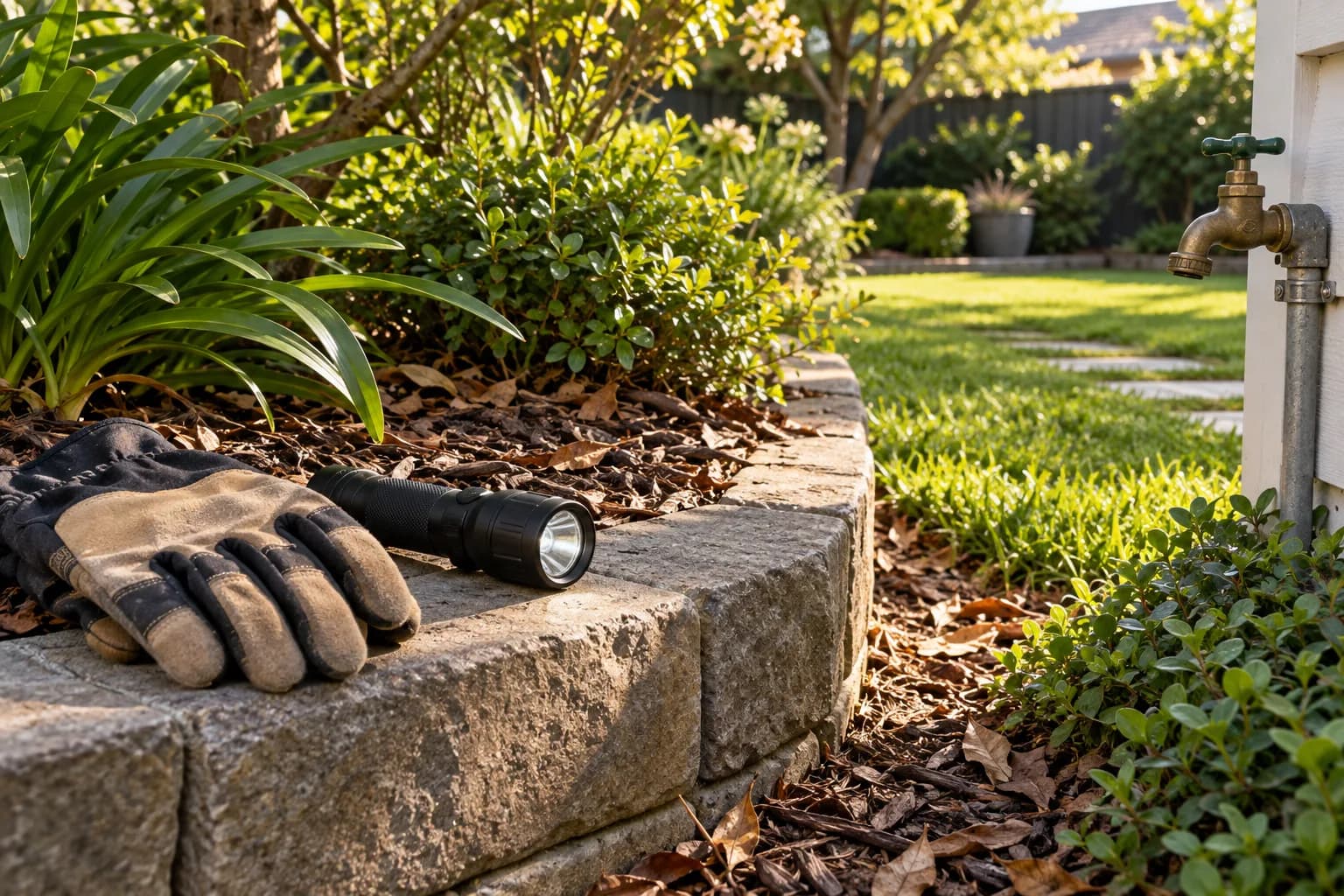 Thick, damp mulch by the house can hold chiggers. Keep it thin and let it dry out.
Chigger Biology: Why They Bite and How They Live.
Products containing bifenthrin, permethrin, cyfluthrin, or carbaryl are effective. For granular products, use a spreader at the labeled rate and water in lightly. For liquid sprays, use a hose-end sprayer or backpack sprayer, focusing on the lower 2 feet of vegetation and the soil surface. Always follow label instructions and keep children and pets off treated areas until dry. Timing is critical. Apply treatment in late spring (May) before chiggers become active, and again in mid-summer if needed. Avoid treating in direct sun or when rain is expected within 24 hours. For persistent problems, a professional can apply a barrier treatment that lasts 6-8 weeks. Many companies, including chigger control, offer a workmanship warranty: if chiggers return within the warranty period, they will retreat at no charge. This provides peace of mind for families with young children and pets. The cornerstone of chigger control is habitat modification. Chiggers need tall grass, brush, and high humidity. By reducing these conditions, you make your yard inhospitable. Mow grass to 2 inches or shorter; this exposes the soil to sunlight and reduces humidity at ground level. Remove thatch if it exceeds 1/2 inch. Clear all brush, weeds, and leaf litter from a 10-foot buffer around the house and play areas. Trim tree branches to increase sunlight penetration. Consider replacing ground cover like ivy or pachysandra (which harbor chiggers) with mulch or gravel in high-traffic zones. Chemical control should be targeted, not broadcast over the entire lawn. Apply insecticides only to areas where chiggers are likely—lawn edges, shaded spots, along fences, and around gardens.
What affects the price
- Property size: Larger yards require more product and labor, increasing cost.
- Severity of infestation: Heavy infestations may need multiple treatments or higher concentrations.
- Regional labor rates: Prices vary by location; urban areas tend to be higher.
- Type of treatment: Granular is less expensive than liquid broadcast; professional sprays cost more.
- Accessibility: Overgrown or uneven terrain may require extra time and equipment.
- workmanship warranty: Companies offering follow-up treatment (ask what is included) if chiggers return may charge a premium.
- Season: Demand peaks in late spring/early summer, potentially increasing prices.
📊
What is your biggest frustration with chiggers?
When to call for help
If you've tried DIY treatments (mowing, clearing brush, over-the-counter sprays) and still have chigger bites within two weeks, it's time to call a professional. Also call if you have a large property, limited mobility, or if family members are severely affected. Professional services like chigger control offer no-charge inspection and a workmanship warranty—Ask about a no-charge inspection. They can identify harborage areas you might miss and apply targeted treatments that last longer.
What you can do yourself
DIY control can be effective for small, accessible yards with mild infestations. Basic steps include mowing grass to 2 inches or less, clearing brush and leaf litter, and applying a permethrin-based spray to lawn edges and shrubbery. However, DIY products often provide only 2-4 weeks of control, and misapplication can leave hotspots. Professionals use commercial-grade products with longer residual (up to 8 weeks) and have access to treatments like barrier sprays that reduce the need for repeat applications. For families with children and pets, professional treatments are often safer because technicians know how to apply products without contaminating play areas. The cost difference is modest ($100-$450 for pro vs. $30-$100 for DIY) considering the time and peace of mind. Many homeowners find that a single professional treatment breaks the cycle.
Where you live matters
The 'chigger belt' roughly follows the Missouri and Mississippi River corridors. In the Northeast and Pacific Northwest, chiggers are less common but can be found in localized spots with tall grass and high humidity. For homeowners in chigger-prone regions, prevention is a seasonal ritual. Many local garden centers and extension offices provide specific advice. For example, the University of Arkansas Cooperative Extension Service recommends treating yards in early May and again in July. In contrast, the Texas A&M AgriLife Extension advises focusing on perimeter areas and avoiding overwatering. Regional variation in climate means that treatment timing should be adjusted based on local weather patterns—a warm spring means an earlier start. Regardless of location, the principles of habitat modification and targeted pesticide use remain the same. Chiggers are most prevalent in the southeastern and midwestern United States, but they can be found as far north as the Great Lakes and as far west as the Great Plains. In the South (e.g., Texas, Louisiana, Mississippi, Alabama, Georgia, Florida, and the Carolinas), chiggers are a near-constant nuisance from April through October, with a peak in June and July. High humidity and abundant woodland edges create ideal habitat. In these states, it's common for entire neighborhoods to be affected, and professional services are in high demand. In the Midwest (e.g., Missouri, Kansas, Illinois, Indiana, Ohio, Kentucky, Tennessee), the season is shorter but intense. Chiggers emerge in late May and remain active through September. They are especially problematic in river valleys and areas with dense undergrowth.
Simple ways to keep chiggers away
- Keep grass mowed to 2 inches or shorter, especially in areas where children and pets play.
- Clear brush, tall weeds, and leaf litter from around the home, garden, and play structures.
- Create a 3-foot-wide barrier of wood chips or gravel between lawn and wooded areas to discourage chiggers.
- Apply permethrin spray to clothing and gear before outdoor activities; treat shoes and pants cuffs.
- After being outdoors in grassy or brushy areas, shower immediately and wash clothes in hot water.
- Discourage wildlife (deer, rodents) from entering the yard, as they can carry chiggers.
- In peak season, treat lawn edges and shady spots with an approved granular or liquid insecticide every 4-6 weeks.
 If you get a quote, ask which spots will be treated and how long to stay off the lawn.
Did you know?
Chiggers inject digestive enzymes that liquefy skin cells—the resulting straw-like feeding tube is called a 'stylostome'.
Despite the myth, chiggers do not burrow into skin or lay eggs under it. They feed on the surface and drop off after a few days.
Chiggers are actually the larval stage of harvest mites, which are bright red and about the size of a pinhead. Adult mites are harmless plant feeders.
Questions people ask
What are chiggers and where do they live?
Chiggers are larval mites that live in tall grass, weeds, and brushy areas, especially in warm, humid climates. They are most active from late spring through early fall.
How do I know if I have chiggers in my yard?
Look for clusters of itchy red welts on yourself or family members after being in grassy or brushy areas. You can also use a white cloth (chigger flag) to drag over vegetation; tiny red or orange specks indicate chiggers.
What is the best treatment for chiggers?
The best treatment combines habitat modification (mowing, clearing brush) with targeted pesticide application. Professional treatments using bifenthrin or permethrin provide longer-lasting control.
How much does professional chigger treatment cost?
Professional treatment typically costs between $100 and $450, depending on property size and infestation severity. Many companies offer no-charge inspection and workmanship warranties.
Can chiggers infest my house?
However, they can be brought indoors on clothing or pets, causing bites inside. Washing clothes in hot water and showering after outdoor activity prevents this. Chiggers do not infest homes; they live outdoors.
Are chiggers dangerous?
In the United States, chiggers are not known to transmit disease. Their bites cause intense itching and can lead to secondary infection from scratching, but they are not a serious health threat.
What percentage of people use tick repellent?
adults, questions asked in 2013 and 2014 found that 20.6% routinely used repellent against ticks, making it the most common precaution even though 57.6% of adults took no routine steps at all. These are self-reported behaviors. An EPA-registered repellent on skin plus permethrin on shoes and socks covers most yard-work and hiking exposure. Only about one in five, according to the most detailed national survey. In a Centers for Disease Control and Prevention (CDC) analysis of weighted ConsumerStyles surveys of U.S.
Can chigger bites cause painful urination in kids?
emergency department, 33% had painful urination and 8% had a weakened urine stream, alongside itching in 84%. Those figures describe selected clinic patients whose cases were attributed to insect or chigger bites, not children in general. If a child has trouble urinating after outdoor play, see a doctor rather than waiting it out. They can, when bites cause swelling in the genital area. In Smith and colleagues' 1998 case series of 94 children treated for summer penile syndrome at one Midwestern U.S.
Sources (12)
The facts in this article come from the public sources listed above. Every home is different, so ask the company you talk to about pricing and what’s included. Published by Chigger Exterminator · Updated September 11, 2026 · How we write these guides