The short version
Wichita is dry enough that chiggers cannot occupy a whole yard, so bites nearly always trace to one shaded, watered, unmowed spot. The larvae feed at the skin surface and never burrow. Find that spot, cut it back and dry it out, and treat only there if the bites continue.
- The South, Southeast, Midwest, and Southwest have the most chiggers, and established infestations there require professional attention.
- Peak activity occurs late spring through early fall (May-September). Warm, humid conditions in the South and Midwest lead to peak chigger bites in grassy and brushy areas.
- Wichita's humid continental climate influences chigger activity patterns year-round.
- Early intervention prevents infestations from spreading and reduces overall treatment costs.
Written for Wichita homeowners with a shaded fence line, tree row, or unmowed back corner, renters dealing with a border nobody maintains, gardeners in irrigated beds, and parents whose kids come inside itching after playing in tall grass. If you would rather solve this with a trimmer than a service contract, the order of the sections below is the order to try things.
What to look for
Only the larval stage feeds on people, and it is tiny. Ohio State Extension puts it at about 1/150 of an inch, so the itch always arrives before any idea of what caused it. Missouri Extension identifies Trombicula alfreddugesi as the species behind most bites nationally and notes it favors disturbed grassy and weedy upland ground. At 1,302 feet, Wichita is upland by any measure, and the disturbed weedy part is supplied by every strip somebody stopped mowing: fence lines, tree rows, ditch banks, and the ragged edge of a lot. The larva climbs a standing stem, catches a passing leg, and travels until clothing stops it. It attaches at the surface, feeds for two to four days, then releases on its own. Nothing tunnels beneath the skin and nothing is laid there. The welt is your own reaction to the feeding structure it forms, which explains both the delay before the itch and how long it lingers.
- 1Bands of hard red welts at the sock line, waistband, or belt line.
- 2Itch that starts hours after you were outside and worsens overnight.
- 3Bites that repeat every time someone crosses the same shaded strip.
- 4Welts staying itchy for five to ten days with no new exposure.
- 5The problem running from May until real cold arrives, then stopping.
- 6Nothing visible on the skin no matter how carefully you look.
- 7Bites ending once the strip in question is cut short and kept dry.
Why it’s worth acting soon
- Scratched welts break open and can get infected, the main medical risk Purdue Extension names.
- Two to three generations mean one untouched strip keeps producing bites all summer.
- The spring treatment window passes and cannot be recovered until next year.
- Uncut growth spreads inward from the border, widening the biting area.
- Children lose the use of the shady part of the yard during a 93F summer.
Treatment options and typical costs
Chemical Treatment
$150-$500
Professional chemical treatment for chigger control. EPA-registered products applied with precision to target areas, providing residual protection.
- Time
- 1-2 hours
- Best for
- Light to moderate infestations in Wichita, KS.
Heat Treatment
$800-$2,500
Professional heat treatment for chigger control. The process involves heating the target area to deadly temperatures, killing all life stages in one session without chemicals.
- Time
- 4-8 hours
- Best for
- Severe or whole-structure infestations in Wichita, KS.
Exclusion Services
$300-$1,200
Professional exclusion services for chigger control. Entry points are sealed, and physical barriers are created to prevent pests from getting in and reinfesting.
- Time
- 2-4 hours
- Best for
- Preventing re-entry and future infestations in Wichita, KS.
Integrated Pest Management (IPM)
$200-$800
Professional integrated pest management (ipm) for chigger control. Combines multiple control methods with ongoing monitoring for sustainable, long-term results.
- Time
- Ongoing monitoring
- Best for
- Long-term prevention and environmentally conscious control in Wichita, KS.
Prices are typical published ranges. Ask what’s included before you compare quotes.
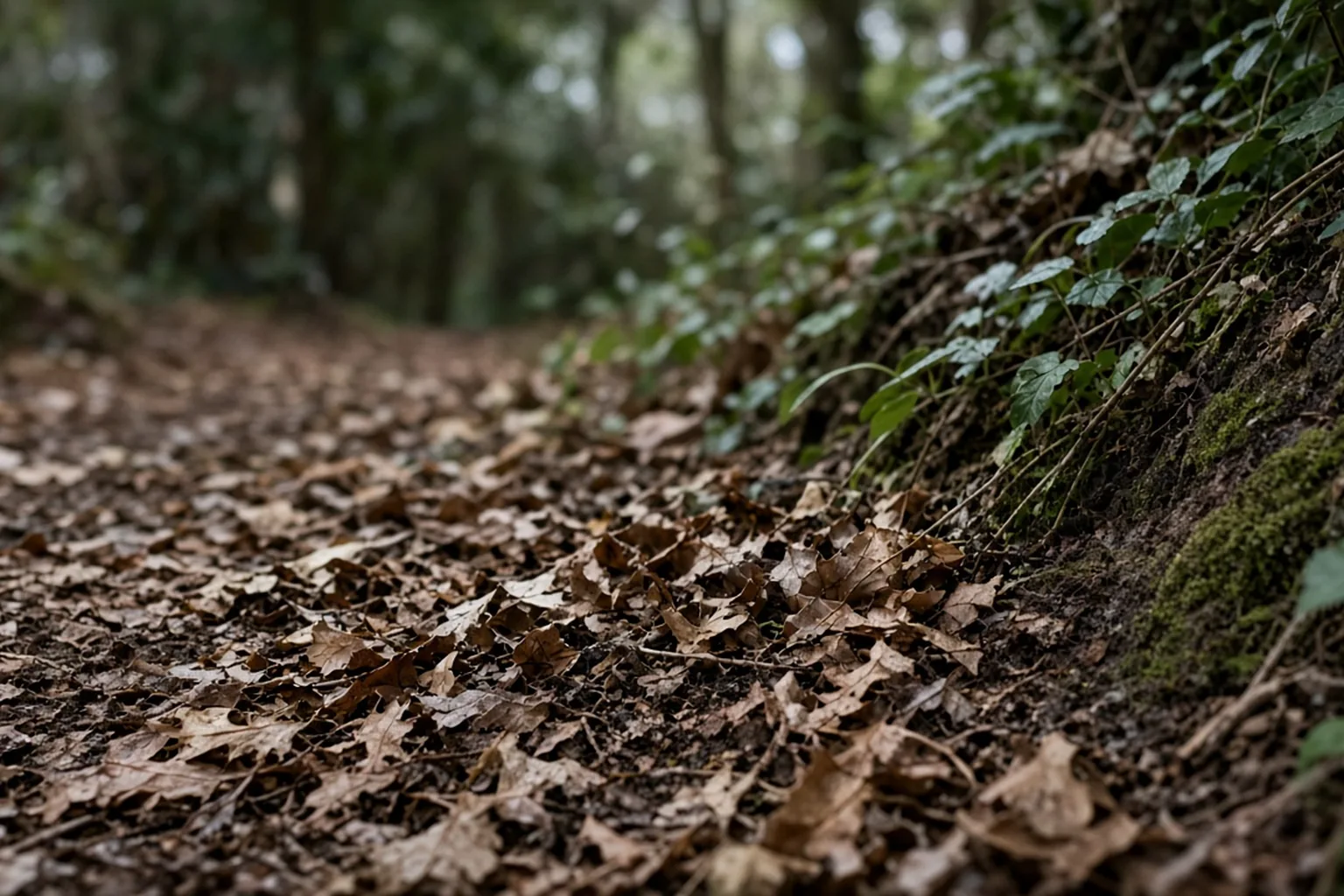 Shady, leafy trails hold moisture chiggers love. Stay mid-trail and use repellent on socks.
In a dry climate, follow the water.
Wichita sits at 1,302 feet and takes about 32 inches of rain a year, which is not much for a place with 93F summers. The practical result is that most of a typical yard is too dry to support chigger larvae for long. That narrows the search enormously. Start with shade, since ground under a hedge, a tree row, or on the north side of a building loses far less moisture than open turf. Then add applied water: sprinkler zones, downspout discharge, a leaking hose bib, or a low corner that collects runoff. Average humidity around 67 percent slows drying in those shaded spots further. Finally look for standing growth, because a larva needs a stem to climb before it can reach a leg. Damp shaded bare soil is not the problem. Damp shaded weeds are. Where all three line up, you have found the source. On most lots here that is one strip, and once you know which one, the entire job becomes manageable with hand tools.
Local chiggers conditions in Wichita.
Wichita sits in a humid continental climate, and that sets the pace for chigger activity here: late spring through early fall (May-September). In Wichita, the area is mostly urban, so chiggers pressure can differ from one block to the next depending on how tight the entry points are and how much food, water, or shelter is close by. An inspection in Wichita usually starts outside and works inward, checking the foundation, gaps around doors and windows, and any moisture or clutter near the structure first. Knowing Wichita's seasonal timing lets you schedule treatment before the busy stretch rather than after it, which usually means faster service and a more accurate quote. A provider who works Wichita and Kansas every day can point out the specific conditions that matter most here, and getting the scope, price, and follow-up terms in writing makes it easier to compare options.
 Damp leaf piles hold moisture chiggers like. Rake them away from the house.
What the spring window is actually buying.
Extension guidance points to late April through mid-June as the productive stretch for treating an area, and it is worth understanding the logic rather than just the dates. Activity begins in May in this climate, and Missouri Extension counts two to three generations across the season. Each generation builds on the one before it. Treating at the start suppresses the population before that compounding begins, which is a different outcome than knocking down a mature population in August. That gives you a decision rule. If it is March, spend your effort on clearing and drying, because you are removing cover before anything hatches into it. If it is May, that is the moment for a targeted application if your yard has a history of bites. If it is already September, put the money into clearing instead. With a killing frost coming and winter lows averaging 22F, the population is about to be erased anyway, and the clearing will still be there next spring.
What happens after a larva finds you.
Knowing the sequence helps because almost every folk remedy for chiggers is built on getting it wrong. The larva reaches you from vegetation, wanders until clothing stops it, and attaches at the skin surface. It does not enter your body. Ohio State Extension puts the feeding period at two to four days if it is undisturbed, typically about three, after which it drops off and continues its life cycle in the soil. Your skin reacts to the feeding structure it forms, and that reaction is what you feel. It builds over hours, which is why the itch shows up long after you came inside, and it peaks around the second or third day. So two things follow. First, a shower within an hour or two genuinely helps, because it removes larvae that have not settled yet. Second, once the welts appear, there is nothing to extract. Wash them, use an anti-itch product, keep fingernails short, and let the reaction run its five to ten days.
What a first visit should cover.
The main thing to buy on a first visit is a diagnosis, especially on a property where habitat is limited to a small area. A pro should walk the full lot, including tree rows, ditch banks, and back corners rather than staying near the house. Expect them to look at where shade falls in the afternoon, check soil moisture in beds and low spots, note sprinkler coverage, and measure growth height along fences. The questions matter as much as the looking: which weeks, which people, where were they walking, and how often does the yard get mowed. By the end they should be naming ground rather than describing the yard, and should tell you which areas they will not treat. Get the plan in writing before anything is applied, including materials, exact areas, reentry intervals for children and pets, and whether mowing and clearing fall to you. If the honest answer is that cutting one strip will fix it, a good pro will say so.
What actually drives the price.
The first factor is how much ground genuinely qualifies as habitat, and in this climate that is usually a small fraction of the lot. A quote priced on total square footage rather than on the productive strips is worth questioning. Second is whether clearing is included. Cutting a weedy fence line and hauling the debris takes hours, and it does more for the outcome than the application does. Find out whether that labor is inside the number or assumed to be your weekend. Third is timing. A pass inside the spring window can make later visits unnecessary, so a quote for a single well-timed application may outperform a cheaper monthly schedule that starts in July. Fourth is access. Tree rows, tight fence corners, and ground that equipment cannot reach all slow the work, and slower work costs more. If part of the property is genuinely hard to reach, ask how they plan to handle it before you agree to anything.
Renters, landlords, and the strip nobody cuts.
Since the fix here is yard work rather than a repair, this problem tends to stall between tenant and owner. Read the lease's lawn care terms first, because they usually settle who owns which half of the solution. Where mowing falls to the tenant, the tenant controls the strongest tool available and should use it weekly from May onward, cutting tight to fences instead of leaving a fringe. What generally goes undone is the heavier work: brush along a tree row, growth on a bank too steep to mow, or an unmaintained easement at the back of the lot. That normally sits with the owner, and it is where the bites usually start. Put it in writing and describe conditions rather than symptoms. Naming the strip, the growth height, and the dates people were bitten gets a response. With median home values across Wichita near $175,000, a few hours of clearing is a small expense against a tenant who cannot use the yard for half the year.
What affects the price
- Local Wichita market rates and cost of living.
- Seasonal demand — prices may fluctuate during late spring through early fall (May-September).
- Property type (single-family home vs.multi-unit building).
- Accessibility of infested areas (crawl spaces, attics, wall voids).
- Number of follow-up visits included in the service plan.
📊
What's your biggest concern about chiggers?
When to call for help
Call when you have mowed short, cleared the border, and dried out what you could and bites are still happening, or when the source sits on ground you cannot cut, such as an easement or a neighbor's overgrown lot. It is also worth a call purely for a diagnosis if you cannot locate the source at all, because in a dry climate the habitat can be one small shaded patch that is easy to walk past. Bring the details: who was bitten, where they had walked, and in which weeks. A pro given one strip to work on will quote a much smaller job.
What you can do yourself
On a typical Wichita lot the homeowner holds most of the use. The controlling factors are grass height, shade, and applied water, and all three are things you adjust yourself. Weekly mowing tight to the edges, a cleared fence line, sprinkler run times trimmed on shaded zones, permethrin-treated clothing, and a prompt shower will settle most cases. What a pro is worth paying for is a diagnosis you could not reach and a properly timed residual on ground you have already prepared. Getting a product down inside the late April to mid-June stretch, evenly, along a long tree row is real work with real equipment. Just make sure the mowing and the watering are handled first, or you are paying to treat a problem you are still creating.
Chiggers in Wichita
Wichita gives this pest a long season on a small footprint. Activity runs from May until the first killing frost, and with average winter lows of 22F, that frost arrives reliably every year. Summer highs of 93F are far past the 60F threshold Ohio State Extension gives for emergence, so warmth is never the limiting factor. Moisture is. At 1,302 feet with about 32 inches of annual rain and average humidity near 67 percent, open ground here dries out between storms, which means chiggers cannot spread across a property the way they do in the humid Southeast. Missouri Extension counts two to three generations a year in this kind of climate, enough for overlapping pressure through summer. Across a city of about 397,000 people where median home values run near $175,000, the productive habitat is usually one shaded, watered, unmowed strip, and finding it is most of the work.
Chigger tips for Wichita
Where to watch out around Wichita
With 67% humidity and about 32 inches of rain a year, Wichita has plenty of the damp, shady ground chiggers like. Bites peak in early to midsummer.
Check first
shady park edges, overgrown lots and damp fence lines.
Quick fixes
Mow short, trim low branches and stop watering shady beds so often.
Before you head out
Repellent on socks and cuffs. Shower and wash clothes after.
Local research
Chiggers in Wichita, KS: what the public record shows
Before you compare quotes, it helps to know which chiggers actually live in Kansas, when they are busiest around Wichita, and what the state figures look like. Everything below links to the agency or university page it came from.
When chiggers are busiest around Wichita
Chiggers are generally active from early spring through late fall, with K-State putting the practical start at late April and the end at first frost. Activity depends on temperature and food availability, and Kansas sees two to three generations per year.
K-State advises mowing turfgrass regularly and removing brush, shrubs, grass and weeds to eliminate harborage, avoiding tall vegetation, tucking pant legs into socks, and showering and hot-washing clothes after exposure. Chiggers in the United States do not transmit disease.
Sources: Kansas State University Agricultural Experiment Station and Cooperative Extension Service; K-State Research and Extension, Extension Entomology; University of Missouri Extension; Ohio State University Extension (Ohioline). Figures are quoted as the source prints them. How we check our sources
Simple ways to keep chiggers away
- Mow weekly from May onward and cut tight to fences and tree rows.
- Pull weeds and cut brush along the property line each spring.
- Shorten sprinkler run times on shaded zones that never dry out.
- Move downspout discharge away from beds and low corners.
- Rake litter out of shaded beds so the soil underneath can dry.
- Thin low limbs so afternoon sun reaches the ground along borders.
- Wear permethrin-treated clothing with pants tucked into socks in tall grass.
- Shower and change within an hour or two of coming in from the yard.
- Keep play equipment and seating on short, sunny grass.
 If you get a quote, ask which spots will be treated and how long to stay off the lawn.
Did you know?
Chiggers inject digestive enzymes that liquefy skin cells - the cause of the itch.
The myth that chiggers burrow under the skin is false.
Questions people ask
Can I treat chiggers myself?
When dealing with very light, early-stage problems, DIY treatments can work, but they are rarely effective for infestations that have become established. Chiggers are skilled at hiding, and store-bought products often lack the strength and coverage of professional-grade treatments. For reliable results, professional control is recommended.
How do I know if I have a chigger infestation?
Look for visible pests, droppings, property damage, unusual odors, or physical symptoms like bites. If you're unsure, a professional inspection can confirm whether you have an active infestation and identify the species and severity.
Are the chemicals used safe for my family and pets?
pest control pros use EPA-registered products applied according to strict safety protocols. When applied correctly by a licensed technician, treatments pose minimal risk. Your exterminator will give you tailored safety instructions, like leaving the premises for 24 hours, based on the products employed.
How long does chigger treatment take?
Most chigger treatments take 1-3 hours for the initial service, with follow-up visits scheduled 1-4 weeks later. Severe infestations may require additional visits. Heat treatments are typically completed in a single 4-8 hour session.
How much does chigger control cost?
Chigger control typically costs $100 to $450. Yard treatment $100-$300. The exact price is contingent on the infestation's seriousness, your property's size, and the treatment used.
Is chigger control covered by homeowners insurance?
Insurance for homeowners generally does not cover pest control, as infestations are viewed as part of routine maintenance. Damage from termites or rodents may be covered, but only under specific conditions. Check your policy for details.
Do chigger bites always leave a visible mark?
No. In Wichita, a 1998 study of 94 children found a papule or bite mark in only 50% of cases attributed to insect or chigger bites. Treat it as a rough guide, not a local count.
How can you tell if swelling is from chigger bites?
Look for other bites and recent outdoor play. In Wichita, bites elsewhere are a strong clue, since 56% of children in a 1998 study of 94 children had them, and for parents that older figure suggests checking ankles, waistbands and skin folds when a child has unexplained genital swelling.
Nearby cities
Related guides
Sources (18)
The facts in this article come from the public sources listed above. Every home is different, so ask the company you talk to about pricing and what’s included. Published by Chigger Exterminator · Updated September 11, 2026 · How we write these guides